
“The timing of LINXS' theme QMat couldn't be better - now is the time to link theory and experiments on quantum materials”

Image: Oak Ridge National Laboratory, U.S. Dept. of Energy
– We are eager that QMat should benefit early career researchers. They are the future, and we want to get as many of them as possible involved during our time at LINXS!
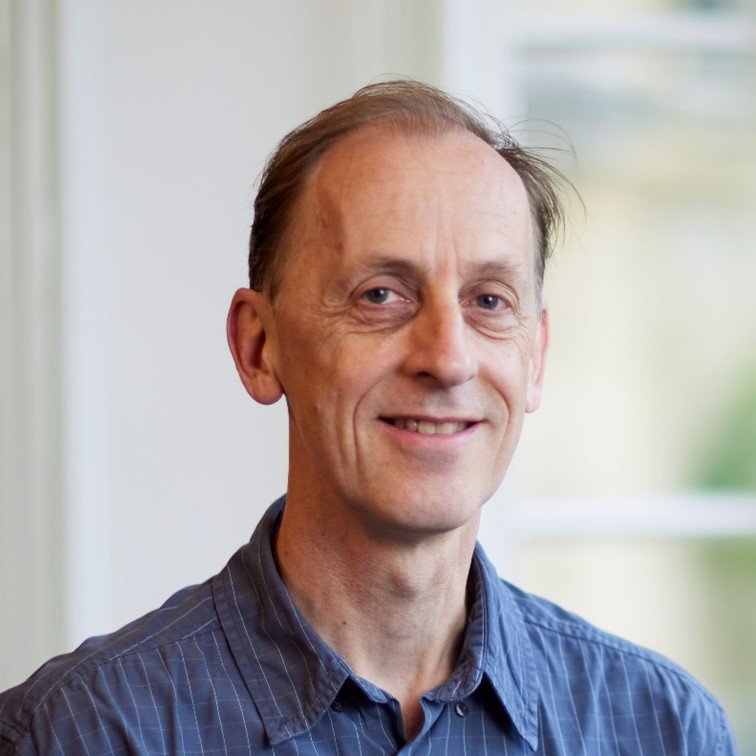
Andrew Boothroyd is Professor of Physics at the University of Oxford, and theme leader for QMat.
As a former member of LINXS’ Scientific Advisory Board, Professor Andrew Boothroyd already had a good understanding of LINXS mission and working model, when he applied for a theme at LINXS. It seemed the perfect time to initiate a set of activities to create a strong network of scientists with focus on quantum materials – centered around ESS and MAX IV.
– While the quantum research community in Sweden is large and thriving, many have not had exposure to X-ray and neutron techniques. Our theme will be a good bridge to access that community, says Andrew Boothroyd, theme leader, and Professor of Physics in the Physics Department at the University of Oxford.
Quantum materials are materials where quantum effects are very prominent. Examples include superconductors, topological electronic solids and various types of magnetic materials.
– The use of neutron and X-ray techniques can help us probe these materials at the atomic scale. They can give us precisely the information we need to understand what endows quantum materials with their special characteristics.
The timing of the new theme, entitled: Quantum materials: Linking theory and experiments at LINXS, ESS and MAX IV, QMat, couldn’t be better, Andrew Boothroyd reflects. The facilities in Lund offer many new capabilities to advance research on quantum materials. At MAX IV, for example, beamlines such as Bloch and Veritas can facilitate experiments where one can access the electronic states in solids, and they can also provide very intense beams of radiation which will enable researchers to study materials more quickly. It is also possible to investigate subtle effects that cannot be seen with lower brightness.
The ESS will offer similar capabilities: four or five of the instruments will be highly significant for quantum materials, including diffractometers such as MAGIC and the spectrometers BIFROST, CSPEC and T-REX. The design of the neutron sources will make it possible to generate highly intense neutron beams, in addition to being able to fine tune the time resolution and spatial range to a very high degree, which is important for quantifying the spectrum of magnetic correlations in full.
Creating bridges between the theory community and the facilities
A particular focus for the theme will be to engage with the theory community, both in Sweden and further afield, with the dual purpose of strengthening the theoretical support for experiments and identifying new opportunities for scientific discovery at the facilities based on contemporary theoretical developments.
– We want to try to provide this community with more information of what is possible to do at the facilities. In particular, we aim to highlight how one can design experiments to test scientific theories, says Andrew Boothroyd.
– In turn, theorists can propose experiments that challenge the facilities: it goes both ways. And this is actually one of our end goals: to design better experiments through collaboration with theoreticians.
The work within the theme will be divided across three working groups: WG1. Ab initio modelling, WG2. Strong electronic quantum correlations, and WG3. Topological quantum materials.
Engage early career researchers
Another important aim is to engage early-career scientists, and strengthen their knowledge and capabilities to use neutron and X-rays techniques.
– We want to get them thinking early on about how they want to exploit the facilities. It can be a very steep learning curve, and it’s important that these techniques are introduced early to facilitate that.
The working groups already have a lot of ideas on how to go about engaging both early career-researchers and the broader community. Annika Stellhorn, instrument scientist at the ESS, has been brought in to help coordinate the work and activities for the early-career scientists. She has experience from organising the LINXS Young Researchers’ Initiative on Hard Matter. She brings an understanding of the challenges faced by PhD students and post-docs, and ideas for what needs to be done to help them.
They envision that most activities will take place at LINXS and Lund, with the possibility to locate some additional events in Oxford, UK.
LINXS, Andrew reflects, is the theme’s natural home, with its excellent networking facilities and close proximity to the MAX IV and ESS facilities.
– LINXS is fairly unique in the world, with its prime focus on research with neutrons and X-rays. This makes it a key hub for researchers engaged with the techniques.
– We hope that our theme will further establish LINXS as a melting pot. The development of new ideas in science relies on social interaction, such as meetings, lectures and a visiting research community, and our activities will enhance this important aspect of LINXS’ work.
After the theme is finished, Andrew hopes to see lasting collaborations, both within the quantum materials community in Sweden, and with instrument scientists at MAX IV, ESS and other facilities. A measure of the theme’s success will of course be the size of the experimental community around the facilities: has it managed to grow because of theme?
Exploring research at the forefront
Another dream goal is to further advance quantum science, and contribute towards solving one of the field’s most pressing questions – how to reduce the amount of energy that is used in technology. Superconductors, for example, are a type of material that, when cooled below a critical temperature, can conduct electricity with no resistance or energy loss. Eliminating the need for expensive cooling devices, which are currently needed to cool down superconducting wires to very low temperatures, could save huge amounts of energy. Many other applications of superconductors are waiting for materials which operate at higher temperatures and in higher magnetic fields.
– Neutron and X-ray techniques can play a key role in helping us engineer better quantum materials, including superconductors.
Register for the Quantum Materials Theme Kickoff meeting, 20 November - 21 November at LINXS!
Read more about Quantum materials: Linking theory and experiments at LINXS, ESS and MAX IV, QMat