This talk was part of the ECIS (European Colloid and Interface Society, https://www.ecis-web.eu/) webinar series.
Speaker: Peter Schurtenberger, Lund University
Abstract: Looking at globular proteins with the eyes of a colloid…
Read More
This talk was part of the ECIS (European Colloid and Interface Society, https://www.ecis-web.eu/) webinar series.
Speaker: Peter Schurtenberger, Lund University
Abstract: Looking at globular proteins with the eyes of a colloid…
Read MoreSpeaker: Prof Henrik M. Rønnow, EPFL
Abstract: The field of quantum magnetism form an arena where theoretical models and experiments on real materials meet to further our understanding of quantum many body physics. I will illustrate the unique role of neutron scattering through results on selected Cu2+ based materials serving as physical realizations of fundamental low-dimensional spin ½ models…
Read MoreTalare: Jennifer Rainsford, Kungliga Konsthögskolan
Möt Jennifer Rainsford, MAX IV:s första artist-in-residence och ta del av hennes arbetsprocess och den konst hon har skapat under året. I en föreläsning på LINXS, i Science Village Loop-byggnaden, berättar hon om sitt konstnärliga arbete och om mötet mellan konst och forskning. Både konstnärer och forskare undersöker och försöker förstå världen omkring oss
Read MoreSpeaker: Malin Bäckström, Protein Production Sweden, Gothenburg University
Abstract: Protein Production Sweden: High-quality services within protein production and purification, delivering proteins for many and diverse research projects.
Protein Production Sweden (PPS) is a national research infrastructure established in 2022, that offers services within protein production and purification for both Swedish and international researchers…
Read MoreSpeaker: Nadine Biedenkopf, the Institute of Virology, Philipps-University Marburg
Abstract: Fifty years after the simultaneous discovery of Ebola virus and Sudan virus in 1976, filoviruses continue to pose a critical threat to global health security, a reality underscored by the ongoing Bundibugyo virusoutbreak in the DRC and Uganda since May 2026. Deciphering core replication mechanisms is essential for identifying…
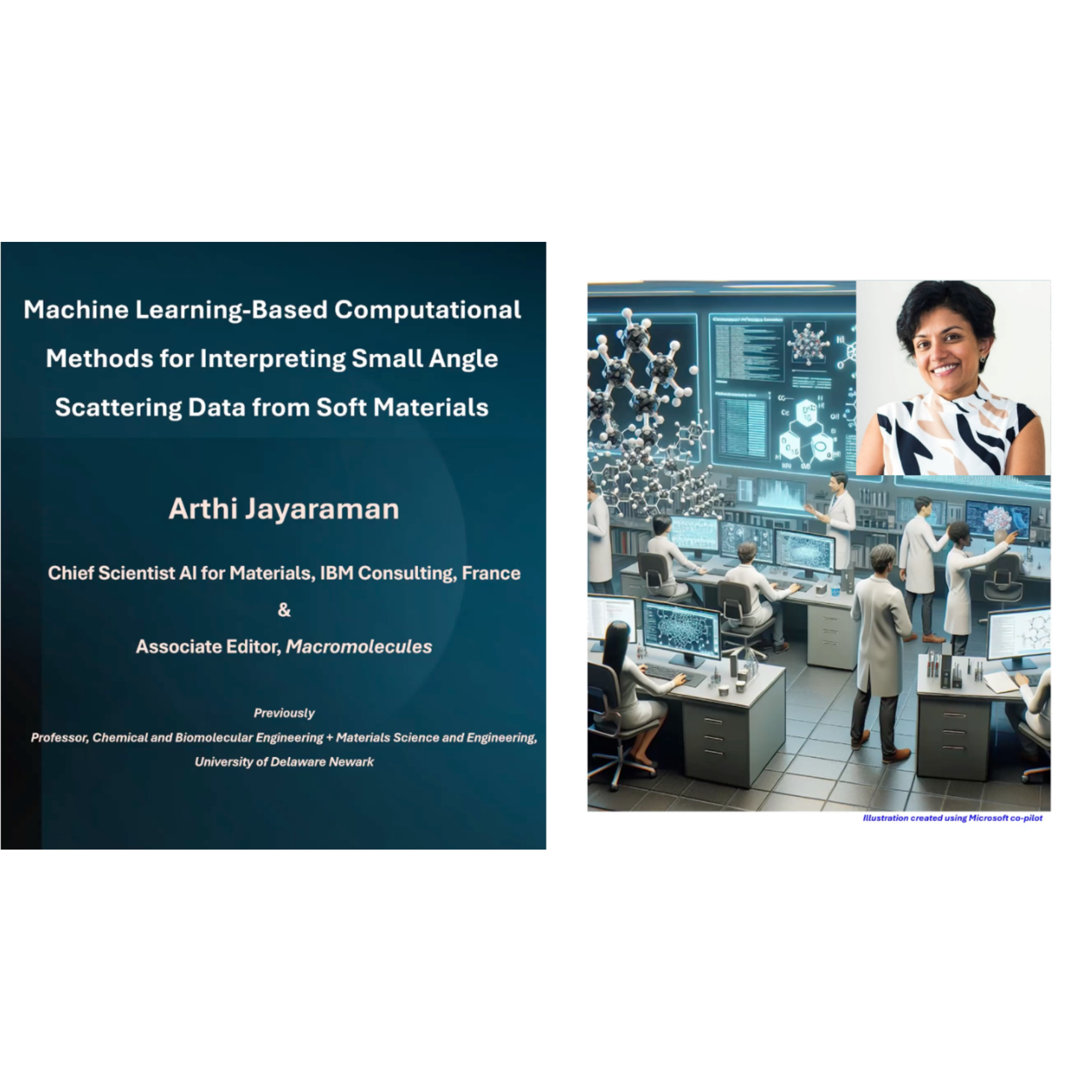
Read MoreSpeaker: Dr. Arthi Jayaraman, Chief Scientist AI for Materials, Science Next Team, IBM Consulting, France Abstract: The multiscale structural characterization of soft materials—ranging from polymer solution assemblies to bio-derived soft gels and fibrils —is often bottlenecked by the difficulty of interpreting…
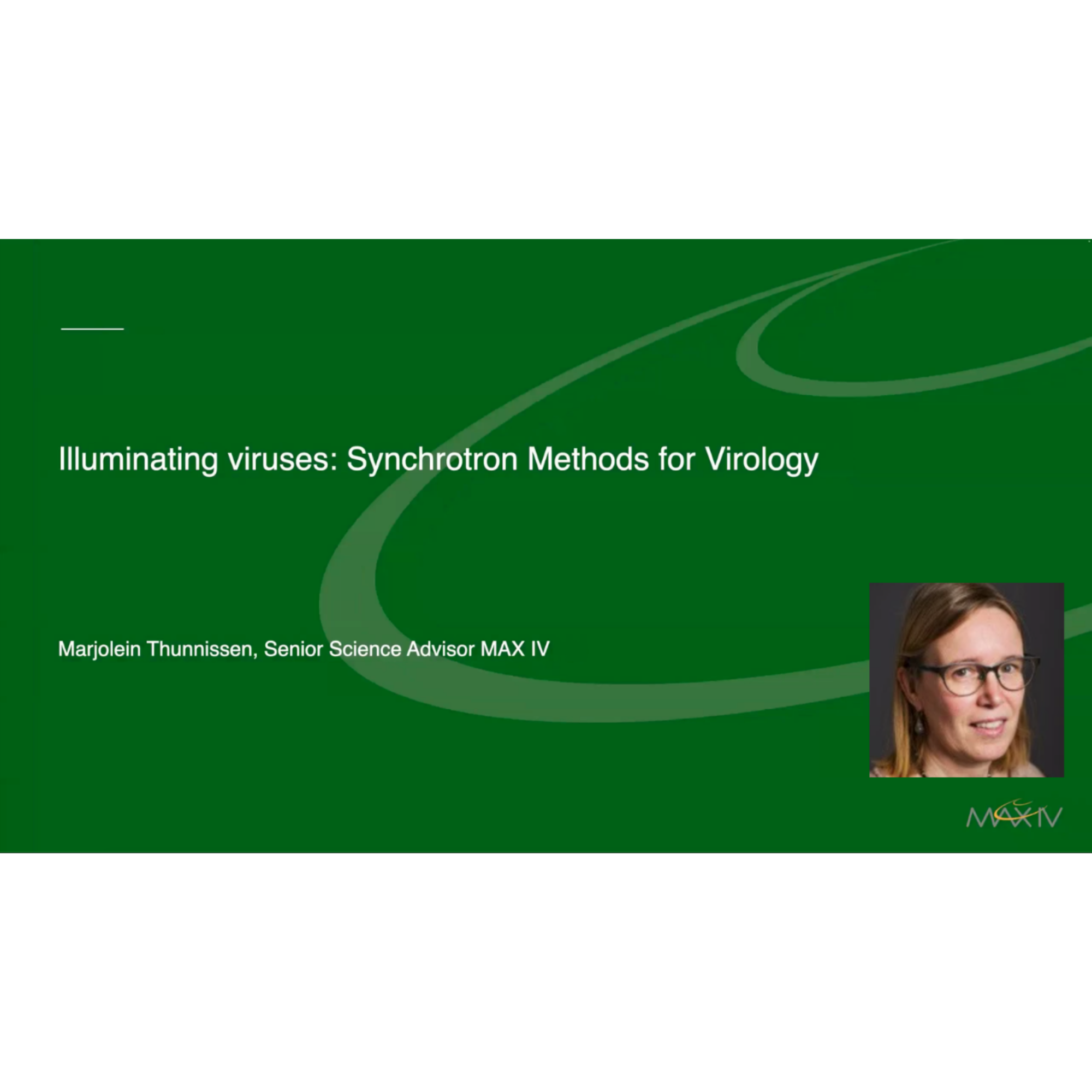
Read MoreSpeaker: Marjolein Thunnissen, Life Science Advisor MAX IV, Lund University, Sweden Abstract: When considering how synchrotrons contribute to virology research, structure determination of viral proteins and entire capsids is often the first application that comes to mind. However, synchrotron facilities provide a much broader…
Read MoreSpeaker: Gaia Sebastiana Ferraro, University of Sassari, Italy Abstract: Large Research Infrastructures are commonly understood as technological platforms designed to enable scientific discovery. Yet their significance extends far beyond their technical capabilities. Through their spatial organization and relationship with…
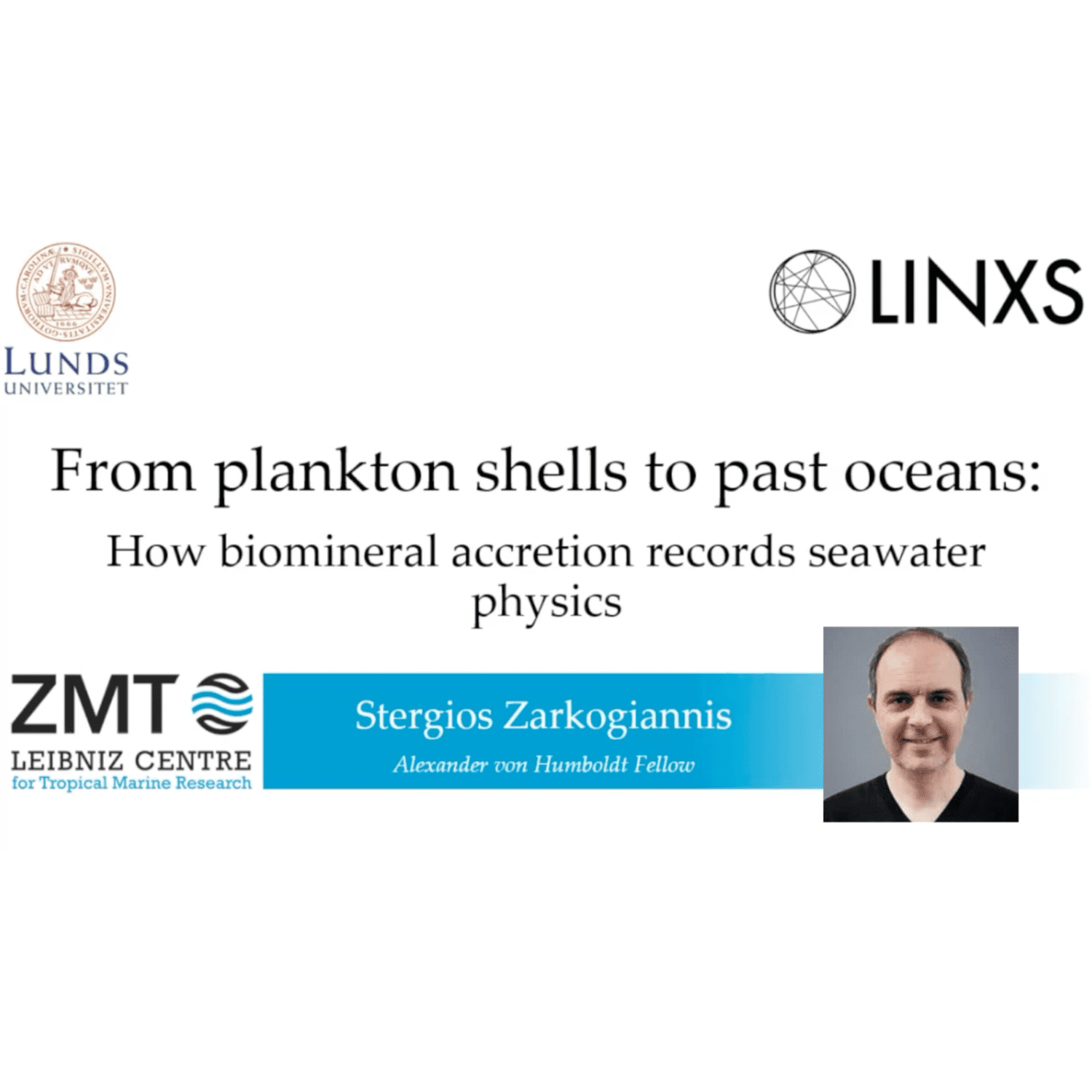
Read MoreSpeaker: Stergios Zarkogiannis, Leibniz Centre for Tropical Marine Research Abstract: Planktonic foraminifera are single-celled marine organisms that build calcite shells and have done so since the Jurassic (~200 Ma). Their shells preserve a rich archive of past ocean conditions through geochemical…
Read MoreSpeaker: Dr. Weiwei He, NYU Abu Dhabi, UAE Abstract: RNA is dynamic biopolymer whose structures, motions, and interactions underlie molecular recognition, gene regulation, and catalysis. Connecting these dynamics to function in native, ion-rich environments remains difficult. Solution-based…
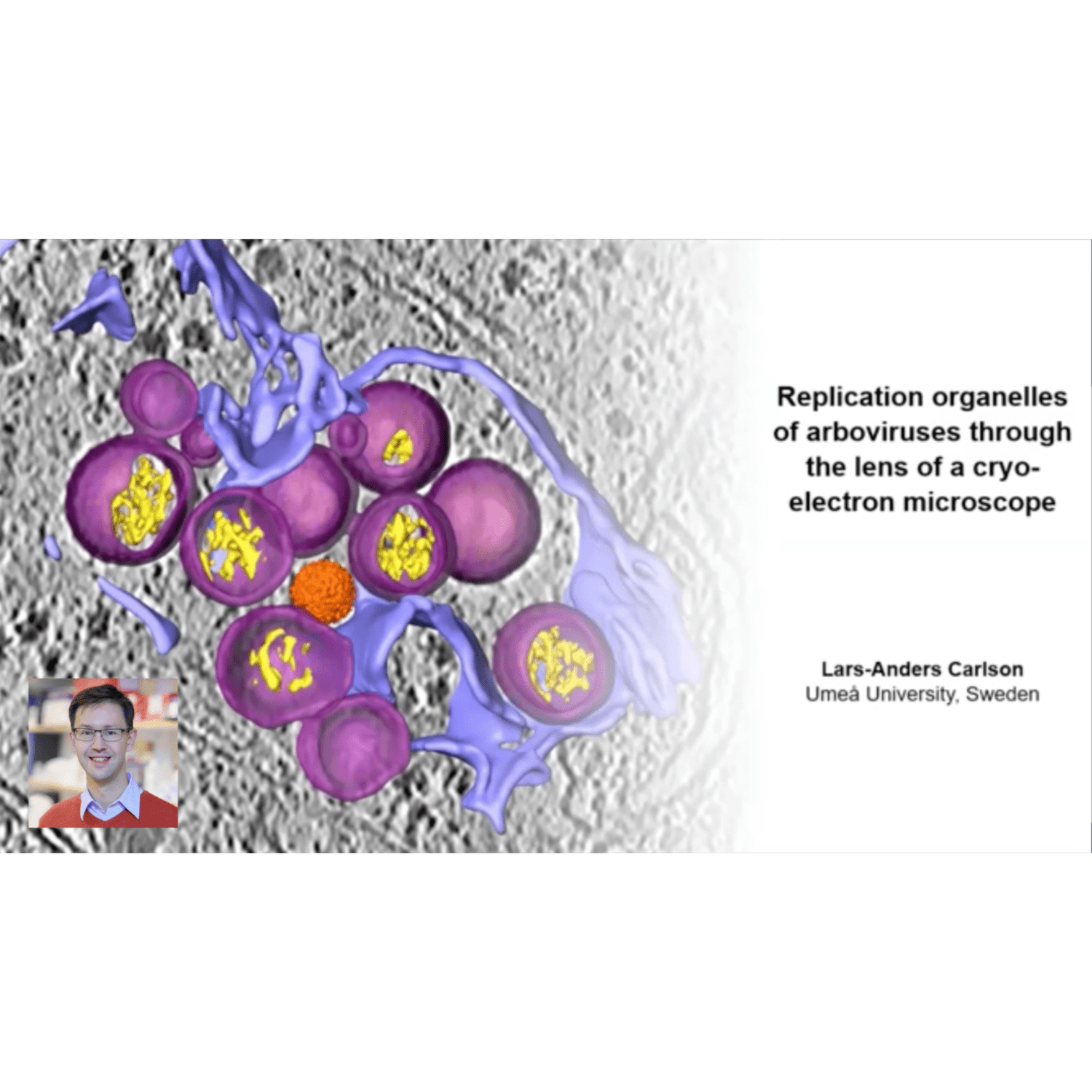
Read MoreSpeaker: Lars-Anders Carlson, Umeå University, Sweden Abstract: Many arthropod-borne pathogens are positive-sense RNA viruses. Such viruses replicate their RNA on remodelled cytoplasmic membranes, in membrane-bound viral replication organelles. These replication organelles frequently take the shape…
Read MoreSpeaker: Prof Lars J. Tranvik, Uppsala University, Sweden Abstract: Dissolved organic matter (DOM) in inland waters plays a substantial role in the global carbon cycle, and thus potentially affects climate as well. This presentation is an overview of the dynamics and fluxes of carbon involving DOM…
Read MoreAbout: This introductory workshop is intended for students and professionals who are interested in the use of advanced characterization methods in heritage science, but feel a bit lost as to where to begin! We have brought together a panel of experts, who use a range of x-ray and neutron techniques…
Read MoreSpeaker: Nayomi Plaza, Materials Research Engineer, USDA Forest Service, USA Abstract: Wood is a complex hygroscopic material with multiple levels of structure that influence its properties and ultimately, performance. Yet, our understanding of the relationship between wood nanostructure and its…
Read MoreSpeaker: Alex Rodzinka, Cranfield University/ISIS Neutron and Muon Source, UK Abstract: Neutron techniques, being completely non-destructive, are excellent for analysing archaeological material. They are best utilised, however, together with other techniques, which allow us to make the most of our…
Read MoreSpeaker: Yuri Gerelli, Institute for Complex Systems - CNR - Sapienza, Italy Abstract: Biomembranes play a critical role in cellular function by separating the interior of cells and organelles from their environment. Understanding the properties and behavior of these membranes is essential for many…
Read MoreSpeaker: Christina Bergonzo, Nist, USA Abstract: Characterization of structure and dynamics is central to the development and assessment of monoclonal antibody-based therapeutics, which need to be effective, stable, and safe biopharmaceutical products. Molecular dynamics has become a central method…
Read MoreSpeaker: Prof Andrew Boothroyd, Oxford University Abstract: Over the past two decades, topology has become an increasingly valuable tool in condensed matter research, providing a radically different way of thinking about materials and enabling the prediction and discovery of exotic states with…
Read MoreSpeaker: Peter Müller-Buschbaum Abstract: The research neutron source Heinz Maier-Leibnitz (FRM II) is a central scientific institute of the Technical University of Munich (TUM) located at the Research Campus in Garching. The FRM II came into user operation in April 29, 2005 and provides neutrons…
Read MoreSpeaker: Laurent Chapon and David Stuart, Diamond Light Source, UK Abstract: We will present the Diamond Light Source, its operation, the experimental capabilities available to academic and industrial users, and the scientific programme in Physical and Life Sciences. We will also present the plan…
Read More